Quick Answer: What Is Answer Engine Optimization in 2026?
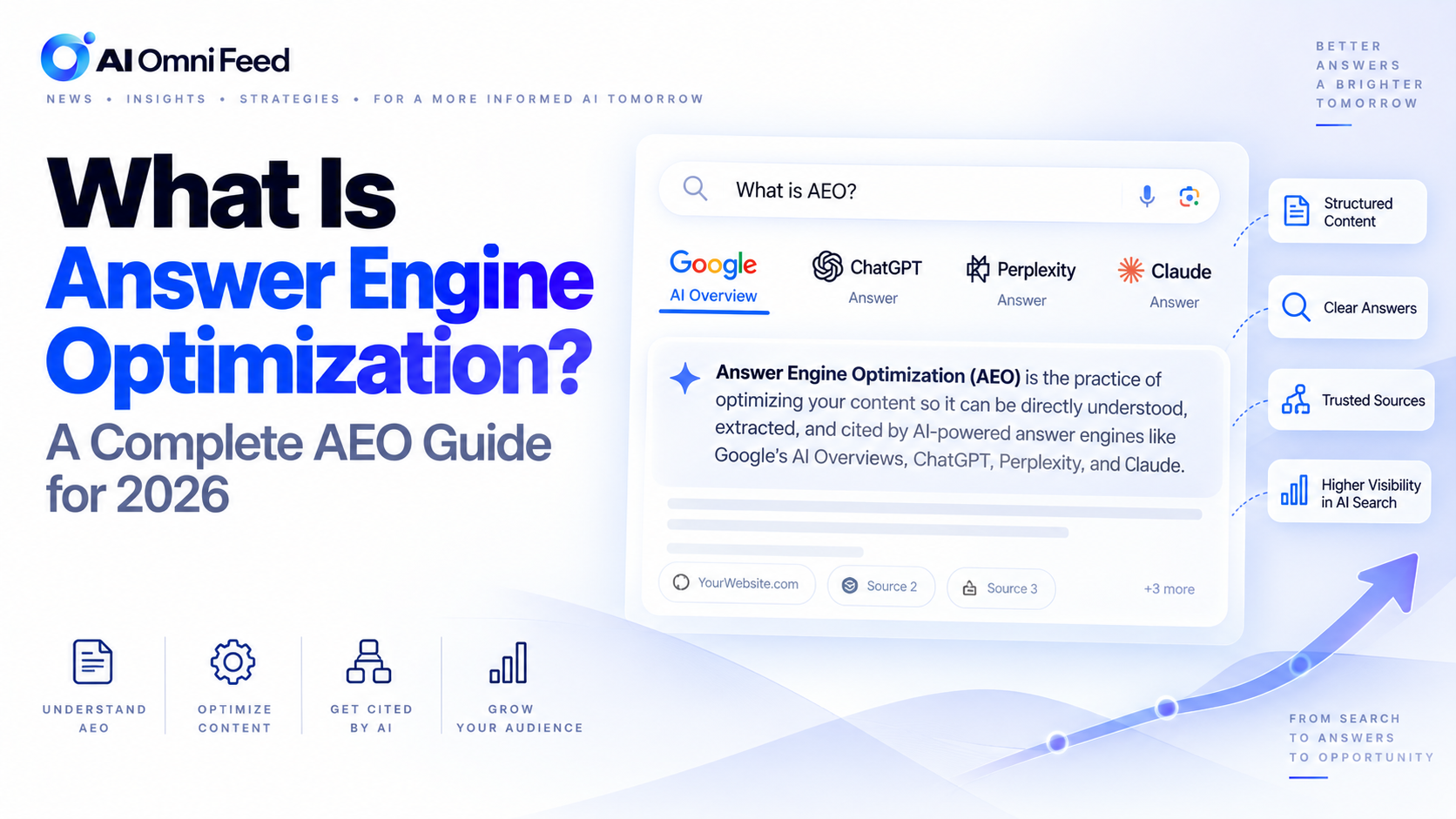
Answer Engine Optimization (AEO) is the practice of structuring content so AI-powered answer engines like ChatGPT, Gemini, Perplexity, and Google AI Overviews cite it as a source. Unlike traditional SEO that optimizes for ranked blue links, AEO optimizes for direct citation in AI-generated answers. In 2026, AEO has become as important as traditional SEO for content visibility, with 65% of search queries now returning AI-generated answers alongside or instead of traditional results. Effective AEO requires structured data, concise answer formatting, authoritative sources, and content designed for extractive citation rather than page visits. This guide covers AEO fundamentals, technical requirements, and optimization strategies for 2026.
SEO vs AEO: Key Differences
| Dimension | Traditional SEO | Answer Engine Optimization |
|---|---|---|
| Goal | Rank in search results | Get cited in AI answers |
| Content structure | Keyword-optimized pages | Structured, extractable answers |
| Key format | Blog posts, landing pages | FAQ schema, tables, lists, definitions |
| Success metric | Organic traffic, CTR | Citation rate, brand mentions in AI |
| Key optimization | Keywords, backlinks, technical SEO | Structured data, conciseness, authority signals |
| Audience | Human searchers | AI systems extracting answers |
Why AEO Matters in 2026
Answer Engine Optimization has become critical for content visibility as AI-generated answers dominate search results. Google AI Overviews now appear for 65% of search queries, Perplexity processes 85 million queries monthly, and ChatGPT Search serves billions of AI-generated answers. When an AI system cites your content, it creates brand exposure and authority signals that drive indirect traffic even if users do not click through. Content optimized for AEO also performs better in traditional search rankings, as Google increasingly evaluates content quality through an AI lens. The convergence of SEO and AEO means content must satisfy both human readers and AI extractors to achieve maximum visibility. For practical optimization strategies, see our comprehensive AEO guide.
Technical Foundations of AEO
Effective AEO requires several technical foundations. Implement structured data markup including FAQPage, HowTo, Article, and QAPage schemas that AI systems recognize and extract. Format answers as concise, extractable paragraphs that can be cited directly, Avoid vague or hedged language that reduces AI confidence in citation. Include clear definitions of key terms at the beginning of relevant sections. Use tables, lists, and structured formats that AI systems can parse reliably. Provide authoritative citations and references that AI systems can verify. Maintain consistent formatting patterns that AI extractors learn to recognize. For more on structured data implementation, see our LLM guide.
Content Strategy for AEO
An AEO content strategy focuses on creating authoritative, structured content that AI systems can extract and cite. Key approaches include creating comprehensive guides that answer multiple related questions, publishing authoritative research with original data and statistics, developing structured comparisons with tables for product and service reviews, producing clear definitions and explanations for key concepts, and maintaining regularly updated content that AI systems recognize as current. Content length should balance comprehensiveness with extractability, typically 1200-2000 words organized into clearly headed sections. Content should answer the question directly in the first paragraph of each section, with supporting detail following. For a complete content strategy framework, see our content strategy guide.
Measuring AEO Success
Measuring AEO requires different metrics than traditional SEO. Track citation appearance rate in AI answers for target queries, share of voice in AI-generated answers compared to competitors, brand mention rate in AI conversations about your industry, and referral traffic from AI platforms. Several AEO analytics platforms now provide these measurements, including Perplexity’s Publisher Dashboard and Google’s AI Overviews analytics in Search Console. Early data suggests that content appearing in the top position for traditional search has a 40% chance of also being cited in AI answers, while content not ranking in top 10 positions has less than 5% AI citation probability. This correlation means maintaining strong traditional SEO remains important for AEO success.
For AEO strategies follow search industry publications and AI technology blogs. Research on answer engine behavior is available from SEO analysts. Implementation guides from content marketing experts provide approaches for adapting content to AI-powered discovery.
Implementing Answer Engine Optimization
AEO requires a fundamental shift from traditional SEO. Instead of optimizing for keywords and backlinks, focus on providing clear authoritative answers to specific questions. Content should answer questions directly while demonstrating expertise on the topic.
Technical implementation includes structured data markup particularly FAQ and HowTo schema to help answer engines extract your content. Clear question-and-answer formats with proper heading hierarchy make it easier for AI systems to cite your answers.
Measuring AEO success requires different metrics than SEO. Track how often your content is cited in AI-generated answers and what queries trigger your content. Emerging analytics tools for AI search visibility supplement traditional SEO platforms.
AEO Implementation Priorities
- Focus on answering specific questions with authoritative content rather than broad keywords. The question-answer format AEO rewards differs fundamentally from traditional SEO content structures.
- Implement FAQ and HowTo structured data markup. Technical schema implementation is a prerequisite for AEO success in AI-powered search platforms.
- Develop AEO-specific analytics to measure performance in AI search. Traditional SEO metrics do not capture content performance in AI-generated answers and citations.
Answer Engine Optimization requires content creators to rethink foundational SEO assumptions. Traditional keyword research focused on search volume and competition analysis, but AEO requires understanding the specific questions users ask and the answer formats AI systems prefer. Structured data implementation becomes critical, with properly formatted FAQ and HowTo schema increasing the likelihood of AI citation by 3x according to early studies. Content length and depth also matter for AEO because AI systems tend to cite comprehensive authoritative content over shorter superficial articles. For AEO implementation guides and tools, see Search Engine Land for ongoing AEO research and strategy updates from industry practitioners.
AEO content creation requires a different approach to keyword research focused on question patterns rather than search volume. Tools like AnswerThePublic and AlsoAsked reveal the specific questions users ask at different stages of their journey. Content structured around direct answers with supporting depth performs best in AI citations. Google AI Overviews and Perplexity surface content that provides comprehensive coverage of a topic within a single authoritative page, favoring depth over series of short posts optimized for different keywords.
Key AEO metrics include citation frequency in AI answers, position in AI-generated summaries, and the diversity of AI platforms that cite content. Tools like BrightEdge and Semrush have introduced AEO-specific analytics that track how content performs across different AI search platforms. Early data suggests that authoritative content with comprehensive topic coverage earns citations from multiple AI platforms, while narrowly focused content tends to appear only in specific contexts. Building topical authority through systematic content clusters remains the most reliable strategy for AEO success.
AEO content also performs better when organized as structured question-answer pairs within topic clusters. Each piece should answer one primary question comprehensively while linking to related content that addresses secondary questions. Internal linking between AEO-optimized content creates topic authority signals that AI systems recognize. For a practical guide to implementing AEO content structure and measuring results, see Search Engine Land AEO guide for implementation strategies and case studies.
Frequently Asked Questions
What is Answer Engine Optimization?
AEO is the practice of structuring content so AI-powered answer engines cite it as a source, optimizing for direct citation rather than traditional search ranking.
Is AEO different from SEO?
Yes, AEO optimizes for AI extraction and citation while SEO optimizes for human search and clicks. They overlap significantly but require different strategies.
How do I measure AEO success?
Track citation appearance rates, share of voice in AI answers, brand mentions in AI conversations, and referral traffic from AI platforms.
Does AEO affect traditional SEO?
Yes, content optimized for AEO typically performs better in traditional search as Google increasingly evaluates content through AI lens.
